3. Suspension baseline, geometry, and chassis development
With the wheel and hub package in place, attention turned to the suspension. A lot of thought went into coilover and spring rate selection because we wanted the car to be firmly sprung, responsive, and willing to rotate in corners rather than feel soft or reluctant to change direction.
A major reference point for that thinking was the Honda Civic FD2 Type R. Having owned an FD2 Type R, and knowing how capable it is as both a street car and a track-focused platform, we used some of its character as a starting point for the Prelude. For us, the FD2 represents one of the high points of Honda engineering from the naturally aspirated era. We paid homage and respect to the engineers that created that balance by trying to replicate some of the same front to rear relationship in the Prelude, while still respecting the fact that the two cars use different suspension architectures and have different weight distributions.
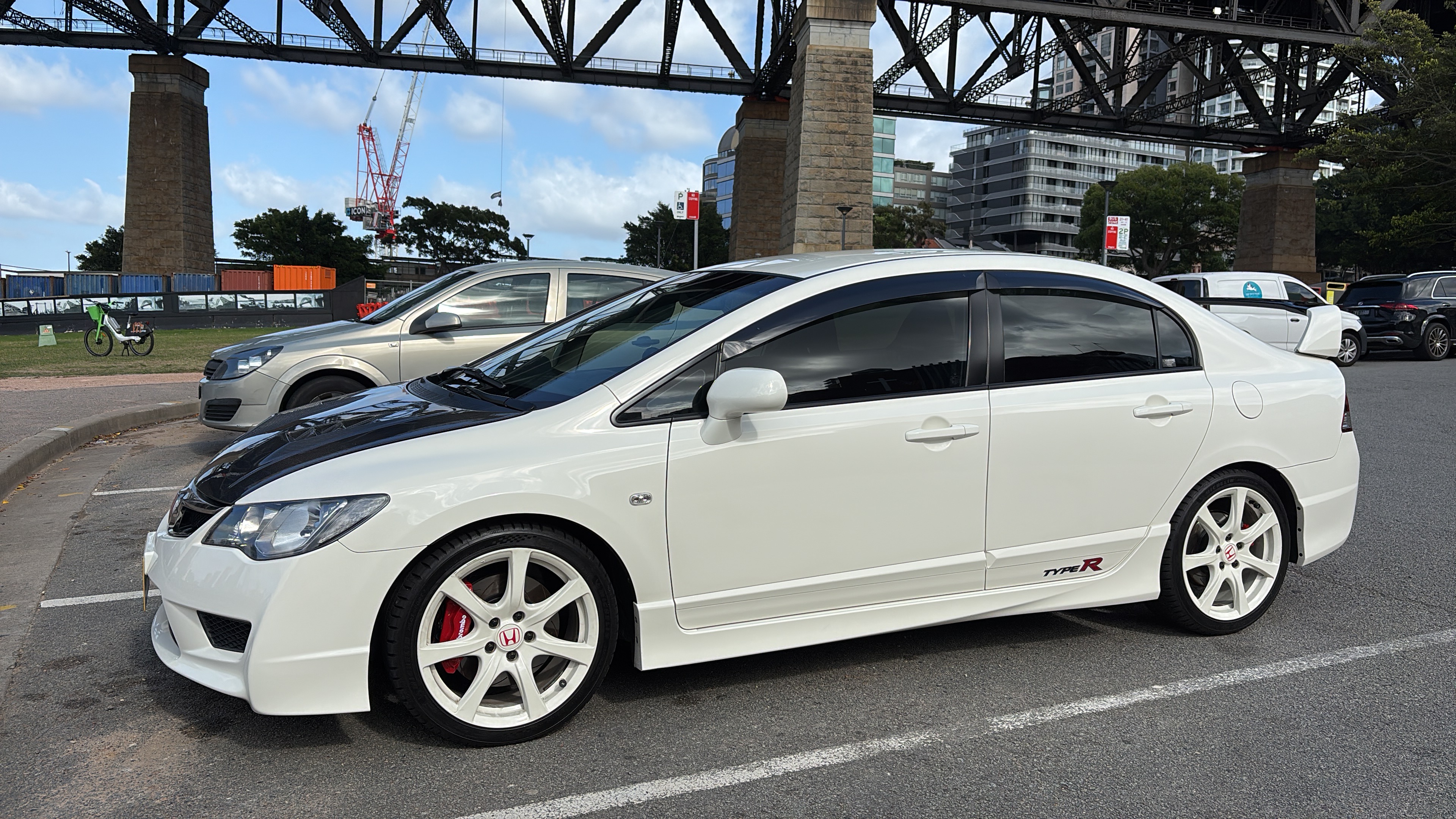
We also drew inspiration from the suspension philosophy documented in StudioVRM’s Prelude race car build. Using those references as a guide, we settled on a 12 kilogram per milimeter front spring and a 14 kilogram per millimeter rear spring combination. That rear-biased spring split was chosen deliberately to help the car rotate more willingly while still giving it the support and stiffness we wanted from the chassis.
Because spring rate alone does not tell the full story, we compared the motion ratios and effective wheel rates against the FD2 Type R as a reference point.
| Parameter | Prelude Front | Prelude Rear | FD2 Type R Front | FD2 Type R Rear |
|---|---|---|---|---|
| Spring rate see we(kg/mm) | 12.0 | 14.0 | 7.2 | 8.4 |
| Motion ratio | 0.842 | 0.801 | 0.901 | 0.787 |
| Wheel rate (kg/mm) | 8.51 | 8.98 | 5.84 | 5.21 |
We did not have proper corner-weighting scales, and published weight distribution figures for the car varied, with many sources suggesting something close to 62 front and 38 rear in standard form. With the removal of the lower front cross member for the traction bar, the lighter K-series package, and the very light lithium battery, we estimated the car to be closer to 60 front and 40 rear.
| Parameter | Prelude 58/42 | Prelude 60/40 | Prelude 62/38 | FD2 Type R |
|---|---|---|---|---|
| Sprung mass front (kg) | 315.1 | 326.9 | 338.7 | 365.7 |
| Sprung mass rear (kg) | 223.4 | 211.6 | 199.8 | 216.3 |
| Natural frequency front (Hz) | 2.59 | 2.54 | 2.50 | 1.99 |
| Natural frequency rear (Hz) | 3.16 | 3.25 | 3.34 | 2.45 |
| Rear/front ratio | 1.220 | 1.277 | 1.338 | 1.228 |
That estimate put the front and rear natural frequency relationship in a range that was surprisingly close to the FD2 benchmark, while still keeping a slightly stronger rear bias. Having a higher frequency in the rear means the rear responds and settles down faster than the front which aids in rotation. The greater the difference between the front and rear frequencies the higher tendency for snap oversteer. For safety reasons as well as for my level of driving skill (which is not inspiring to myself and many others to say for the least) the current spring rates provide that balance.
| Item | Specification |
|---|---|
| Chassis | 1995 Honda Prelude 4th generation AUDM BA8 |
| Tare weight | 1183 kg |
| Front motion ratio | 0.842 |
| Rear motion ratio | 0.801 |
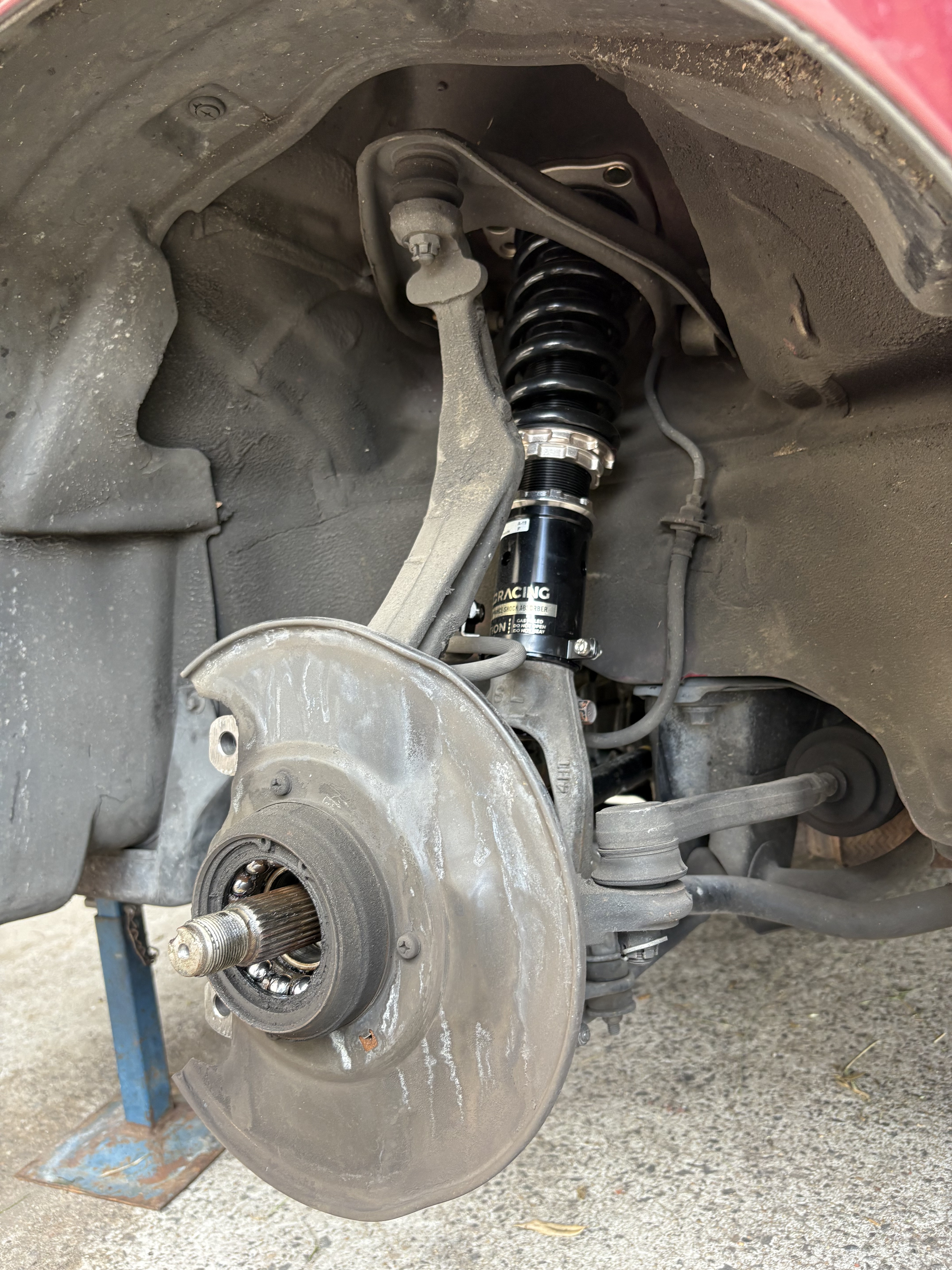
| Front suspension | BC Racing Custom Coilovers BR Design RA/RN/RS Series |
| Front spring rate | 12 kg/mm |
| Rear spring rate | 14 kg/mm |
| Tyres | Yokohama Advan Apex V601 225/45R17 |
 |
Wheel alignment
| Axle | Setting | Left | Right |
|---|---|---|---|
| Front | Camber | -2°22’ | -2°18’ |
| Front | Caster | +2°31’ | +2°53’ |
| Front | Toe | +0.2 mm | +0.1 mm |
| Rear | Camber | -2°09’ | -1°59’ |
| Rear | Toe | +2.1 mm | +1.1 mm |
The suspension geometry is set up with meaningful negative camber at both axles and a conservative amount of toe for stability. Combined with the tyre size, spring split, and rear anti-roll bar, the setup aims to improve front-end bite while keeping rear axle response crisp and predictable.
Polyeurethane Bushing refresh
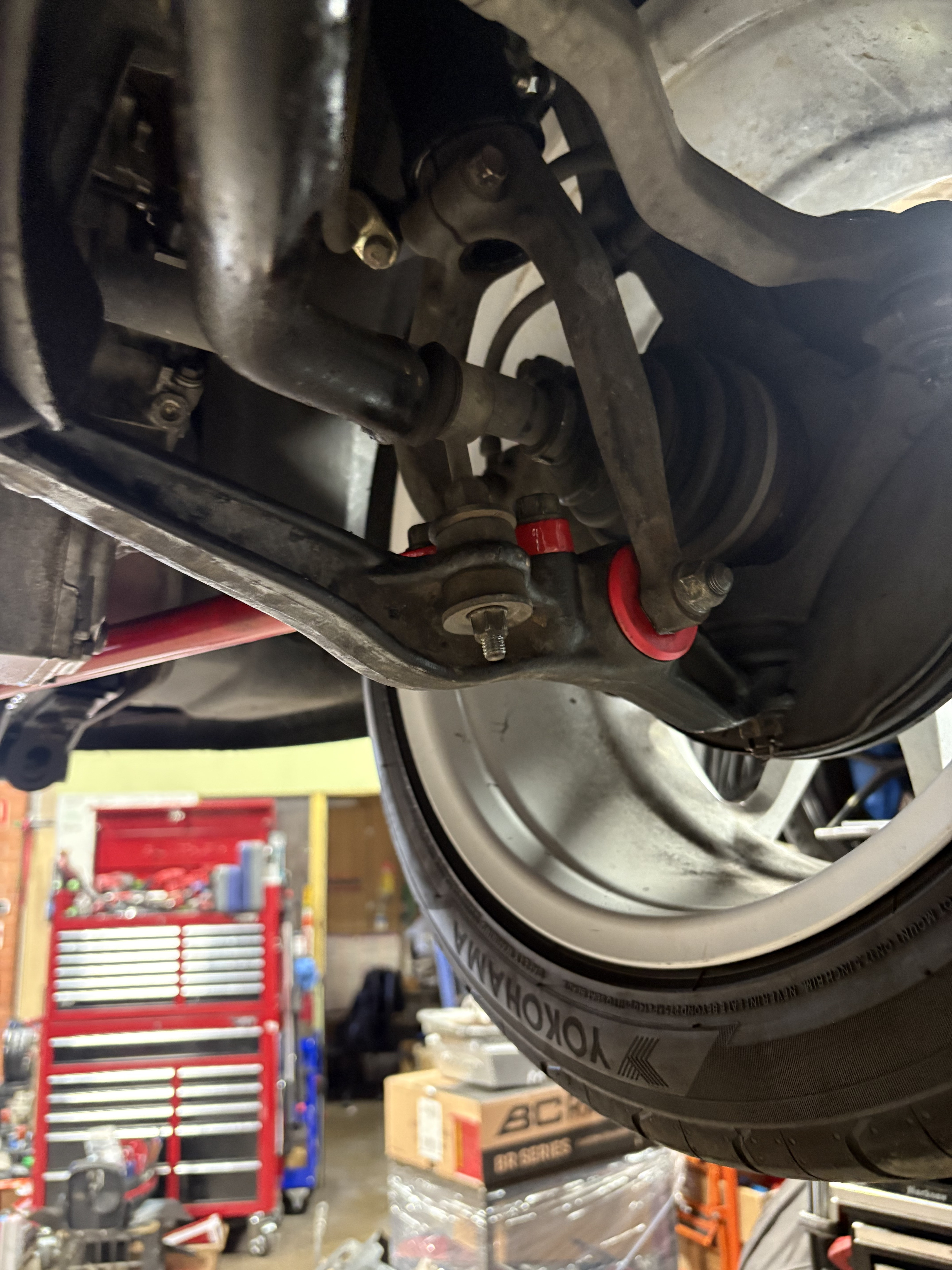
After installing new coils and tyres, we went further went to refining the chassis. The stock rubber bushings from factory are designed to provide comfort reduced NVH. For our purpose of having something that would be driven hard at the track, we want to bump up the overall stiffness of the car. Using polyeurethane bushings would provide less compliance. We replaced the bushings on all the lower control arms in the front and rear with polyeurethane from Energy suspension.
Chassis bracing and rigidity
Surprisingly, the so-called front-heavy Prelude comes in lighter than an FD2 Type R and carries superior double wishbone geometry at both ends, but it gives away ground in chassis rigidity. To bring the Prelude closer to a more modern standard, we added stiffness where we could through bracing and sub-frame improvements, accepting a little added weight in exchange for better platform control. The double wishbone geometry at the front and rear gives better camber control.
Unfortunately there is not much aftermarket support for fourth generation Preludes, but Ultra Racing still offered some useful bracing for the car. To increase some torsional rigidity we braced the car with the following parts:
- Rear strut bracing
- Fender braces
We also added the following supporting suspension and chassis parts:
Removal of front cross member and Traction bar install
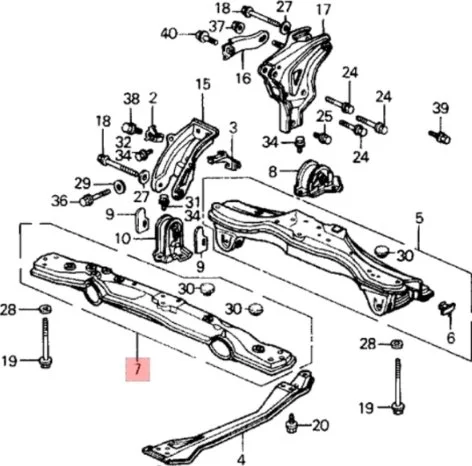
This was perhaps once of the best installs for the car that served 2 cases. In order to fit the new K series engine, for extra space to fit the engine it was necessary to remove the cross member. The front engine mount connects to this as well as the radius rods. A new traction bar by innovative mounts would replace this. This was a great mod because:
- we stripped some weight
- the k24 engine would fit
- the traction bar provides more rigidity in the fore and aft movements compared to the oem radius rod which uses rubber bushings. The result is a more direct response in steering under throttle.
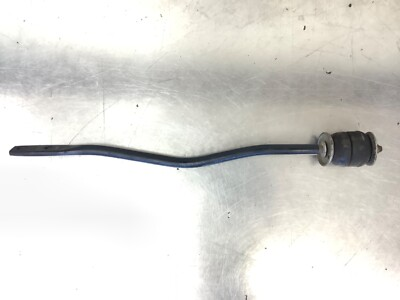
The oem radius rod with rubber bushings. There is more compliance with the fore-aft movements.

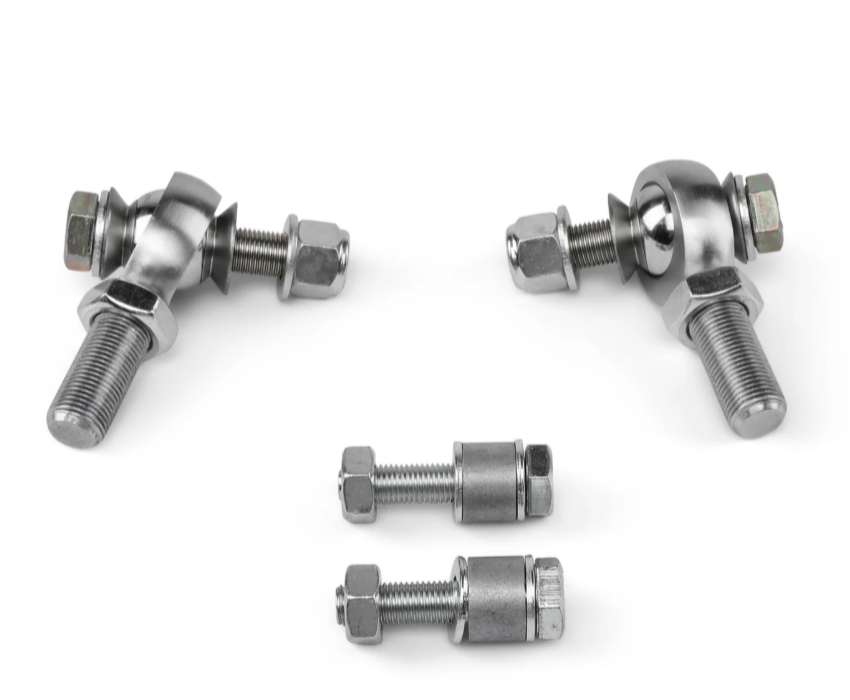
Rather than rubber bushings which has a lot of compliance, the innovative mounts use spherical helm joints. Which means there is actually no compliance. The load transfer is direct and immediate in the fore and aft movements of the vehicle which results in a more direct steering response and the car feels more planted.
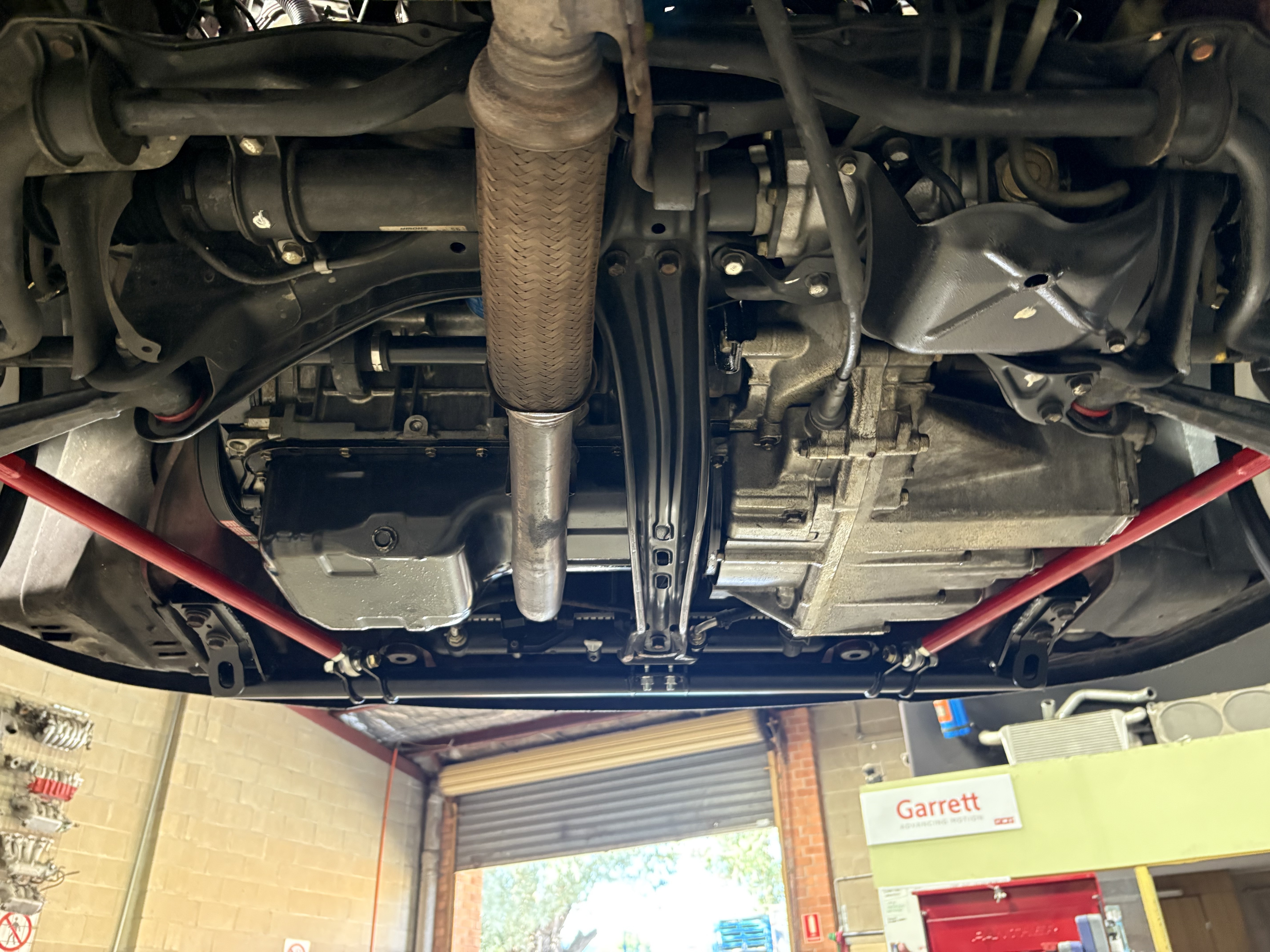
One thing to note here, is the traction bar is made for a H/F series engine. So the front engine mount position on the traction bar will not fit with the K series without some custom fabrication.
- Ultra Racing 23 millimeter solid rear sway bar
- Reinforced stabilizer rear endlinks
- Ultra racing Front lower subframe brace
- Ultra racing Rear lower subframe brace
- Spoon rigid collars in the front and rear subframes
- Innovative Mounts traction bar kit
- Energy Suspension polyurethane bushings
- Hardrace front upper camber kit
- Hardrace rear upper camber kit
- Hardrace rear lower toe arms
The FWD understeer problem
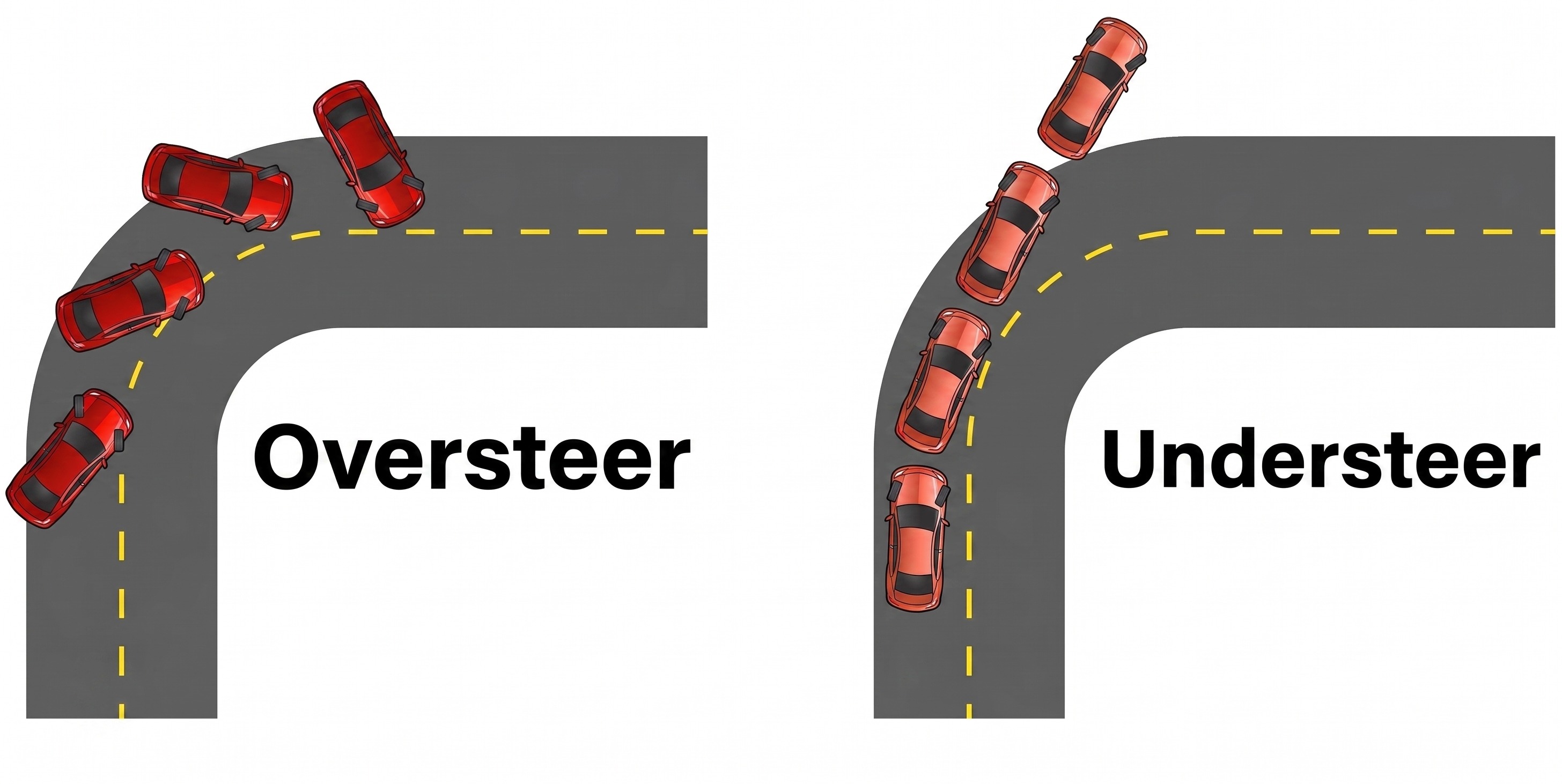
Front-wheel-drive cars are notorious for understeer, so a significant part of this package was the stiffer ultraracing rear sway bar. By increasing rear roll stiffness while leaving the front sway bar stock, we reduced the rear axle’s total grip compared to the front in cornering just enough to make the car rotate more willingly and reduce understeer. By pairing stiffer endlinks with the sway bar, there is reduced complance, which effectively makes the rear sway bar stiffer. This allows the load transfer to occur quicker.
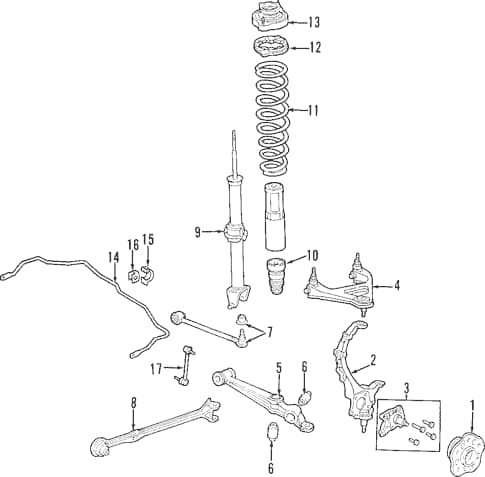
The sway bar acts like a torsion spring which links the right and left suspension together. The endlinks connect the end of the swaybar to the rear suspension arm. During a turn, the suspension arm moves relative to the body and the endlink will either push or pull on the bar arm. The bar twists across the car to resists roll.
Spoon Rigid Collars
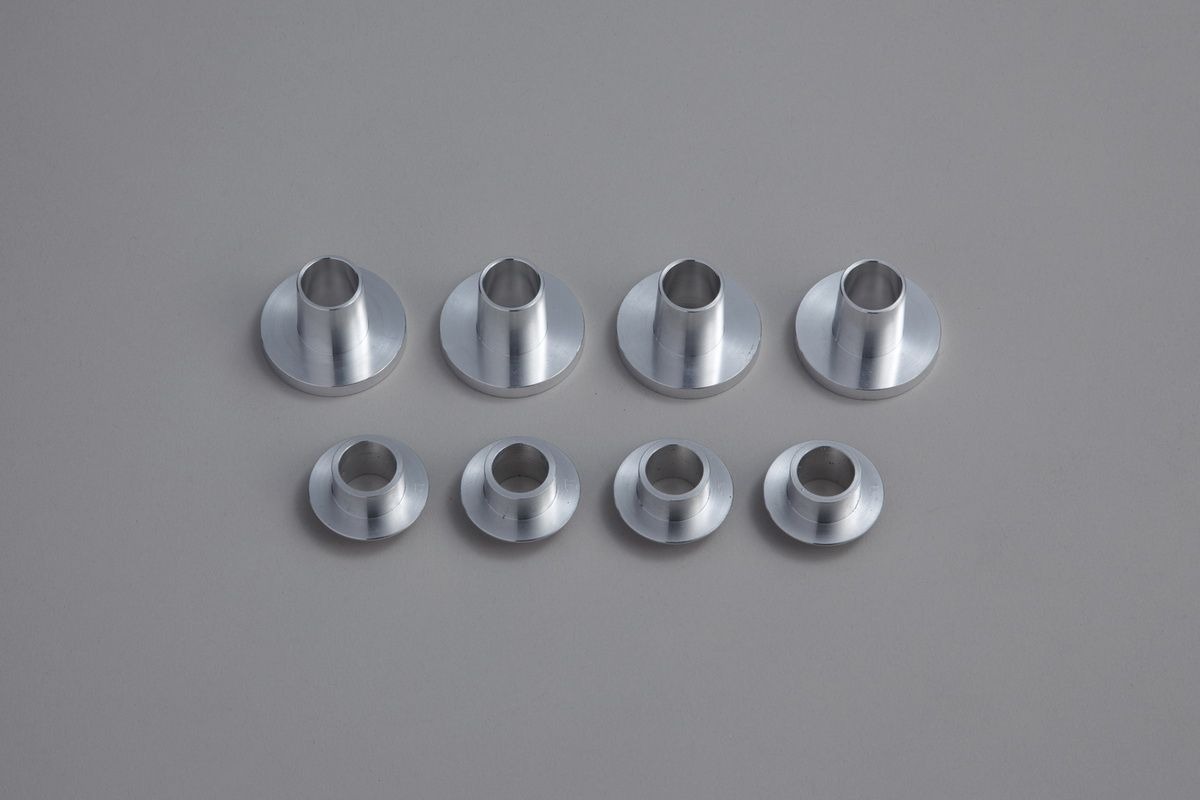
Along with the traction bar install. This was one of my favourite mods to the car chassis. We had these installed in both the front and rear subframes and they made a noticeable difference on this older chassis. Being an older platform, there is more movement between the subframe and the bolts than you would expect in a newer shell. The collars close up that slack by eliminating the factory-allowed gap between a car’s subframe and chassis, centering the bolts and locking the subframe in place and make the whole car feel tighter and more connected in turns. Because your subframe doesn’t move around from the factory gaps, your suspension geometry remains more consistent and planted.